



CTM Portal: the digital home of modern business travel programs
Managing a business travel program today is rarely straightforward. Travel managers are expected to balance cost control, traveler experience, duty of care, sustainability, and data reporting, often across multiple regions and systems.
In many organizations, travel information lives in several places. Booking tools, approval workflows, risk platforms, traveler profiles, and reporting dashboards may all sit in separate environments. This fragmentation can make it harder to manage the program effectively and harder for travelers to know where to go for support.
As expectations continue to rise, more organizations are rethinking how their travel programs are structured digitally and asking a fundamental question: where should a travel program actually live?
Why business travel programs need a central digital home
As corporate travel programs mature, complexity tends to increase. Global operations, hybrid work patterns, evolving risk considerations, and increased scrutiny around spend and compliance all add layers to program management.
Without a central point of access, travel managers may face challenges such as:
- limited visibility across bookings, travelers, and risk
- inconsistent traveler experiences across regions
- time lost navigating multiple systems
- difficulty communicating program updates and expectations.
A centralized travel management portal helps address these challenges by providing a single digital environment where travel-related tools, information, and services can come together.
What travel managers should expect from a travel management portal
A modern travel portal is not simply a booking tool. It acts as a hub that supports the full travel lifecycle, from planning and approval through to travel, reporting, and post-trip analysis.
From a travel manager perspective, a travel portal should:
- provide consistent access to travel tools and information
- support policy governance and approval workflows
- improve visibility of traveler activity and risk
- simplify communication with travelers and stakeholders
- reduce administrative friction.
For travelers, the portal should be intuitive, easy to navigate, and clearly positioned as the primary place to manage their business travel.
Bringing travel tools and information together
One of the key advantages of a centralized portal is simplicity. Instead of switching between multiple platforms, users can access relevant tools and information in one place.
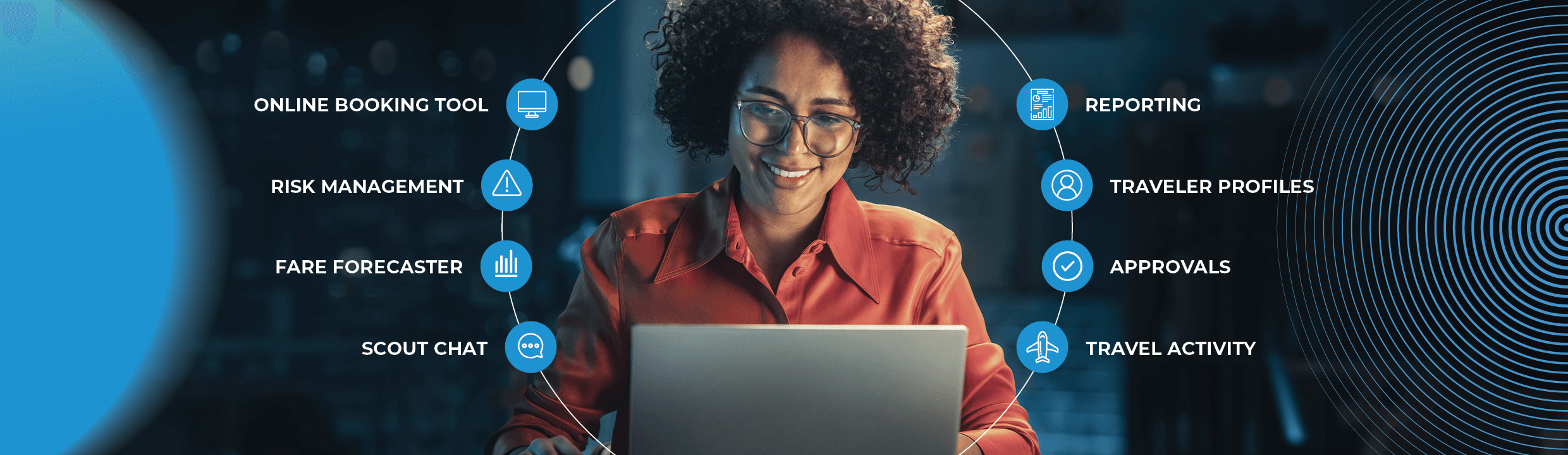
This may include online booking, itineraries, traveler profiles, approvals, alerts, and reporting access, depending on the role of the user. When these elements are brought together thoughtfully, travel programs become easier to manage and easier to scale.
CTM Portal was developed with this principle in mind, serving as a single access point for business travel programs while allowing flexibility to adapt to different program structures and regional needs.
Supporting duty of care and traveler visibility
Duty of care remains a critical responsibility for travel managers. Knowing where travelers are, understanding potential risks, and being able to communicate quickly are essential components of a responsible travel program.
A centralized travel portal can support duty of care by improving visibility of traveler activity and enabling quicker access to risk information and alerts. When risk management tools are integrated into the broader travel environment, responses can be faster and more coordinated.
This level of visibility supports informed decision-making and helps organizations meet their duty of care obligations more effectively.
Improving governance without adding complexity
Travel policy compliance, approvals, and financial oversight are ongoing challenges for many programs, particularly as organizations grow or operate across multiple markets.
A travel management portal can help by centralizing approvals and providing clearer visibility into booking behavior and program activity. This supports stronger governance while reducing the need for manual processes or disconnected workflows.
Rather than adding another layer of complexity, the goal of a portal is to simplify how travel programs are managed day to day.
The role of portals in modern travel programs
As travel programs continue to evolve, technology plays an increasingly important role in supporting both operational efficiency and strategic decision-making.
A centralized travel portal provides a foundation that allows travel managers to:
- adapt to changing traveler needs
- respond to risk more effectively
- maintain program consistency across regions
- access insights that support continuous improvement.
For many organizations, the portal becomes the digital home of the travel program, creating clarity for travelers and confidence for stakeholders.
Bringing structure to modern travel programs
As business travel programs become more complex, the way they are supported digitally matters more than ever. Travel managers are no longer just booking trips, they are overseeing risk, policy governance, traveler experience, and reporting across the organization.
A centralized access point within a broader travel technology ecosystem helps bring structure to this complexity. It gives travel managers a clearer view of their program and gives travelers a consistent place to engage with business travel.
Rather than adding another tool, the right portal approach simplifies how travel programs operate day to day, supporting better decisions and a more cohesive travel experience.