


Rethinking the hotel RFP: Why corporate accommodation programs are evolving
For decades, the hotel RFP has been the backbone of accommodation procurement, helping businesses secure negotiated rates, consolidate spend, and drive control. But today’s travel environment is changing faster than an annual RFP cycle can keep up with.
Economic pressures, technology innovation, sustainability requirements, and shifting traveler expectations are reshaping how companies source accommodation. Businesses are now asking a new question: Is the traditional RFP still the best way forward?
Why companies are rethinking the hotel RFP
Modern travel programs demand more than rate negotiation. Corporate travel teams increasingly rely on their TMC to deliver strategic guidance, data-led insights, and multi-channel content that unlocks measurable value.
Where TMCs add value today
Travel buyers lean on TMCs because they provide:
- strategic alignment between travel goals, budgets and experience
- buying power that enhances competitiveness and strengthens supplier partnerships
- extensive content depth across GDS, OTAs, direct connects and unique venues
- predictive analytics that support smarter, data-driven negotiations.
The results speak for themselves:
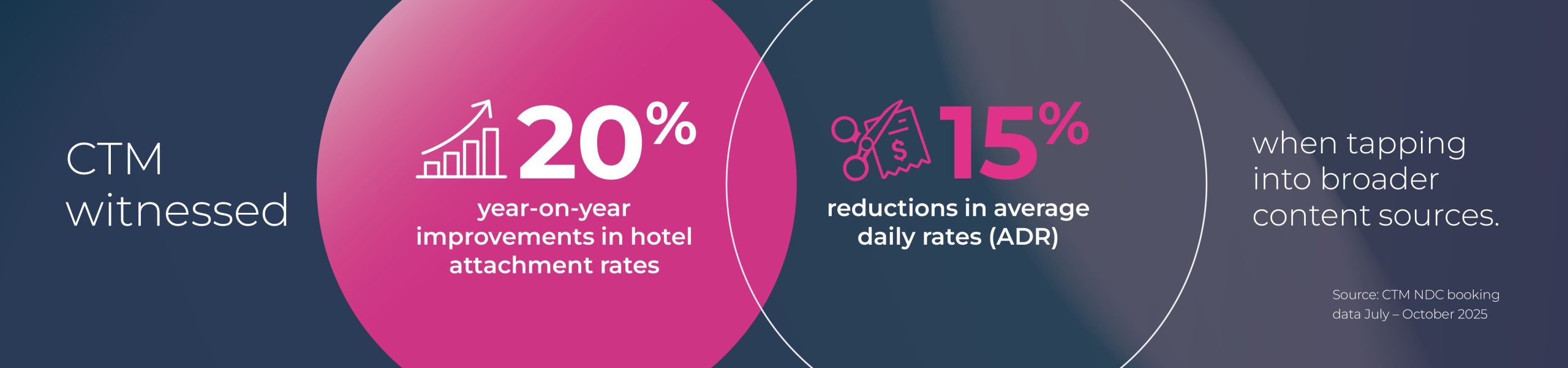
CTM witnessed 20%* year-on-year improvements in hotel attachment rates and 15%* reductions in average daily rates (ADR) when tapping into broader content sources.
From RFP to relationship: A shift toward continuous partnership
Traditional hotel sourcing relies on one large procurement window each year. But forward-looking programs are replacing the “annual event” with an always-on, data-led partnership model.
Traditional RFP vs continuous procurement
Comparing the traditional RFP to continuous procurement, there are several shifts:
- From annual rates to hybrid negotiated and dynamic pricing
- From reactive savings measurement to real-time monitoring
- From administrative-heavy processes to AI-powered automation
- From cost-only focus to holistic value (ESG, experience, efficiency)
This approach enables organizations to adjust throughout the year, responding to rate fluctuations, traveler feedback, or supply changes – not 12 months later.
Content depth: the hidden driver of compliance and savings
The depth and breadth of hotel content available to travelers directly influence program performance.
A rich content ecosystem delivers:
- improved compliance through better visibility of preferred hotels across channels
- lower leakage, enhancing duty of care and data accuracy
- reduced costs, driven by aggregated dynamic rates and distressed inventory
- higher traveler satisfaction, thanks to greater choice and convenience.
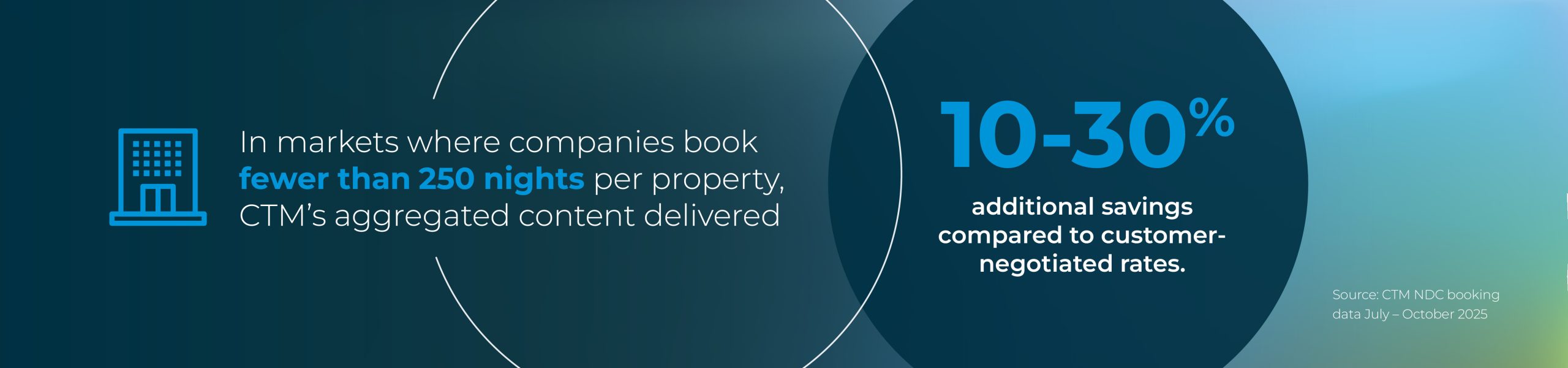
In markets where companies book fewer than 250 nights per property, CTM’s aggregated content delivered 10–30%* additional savings compared to customer-negotiated rates.
Compliance, controls and traveler experience need equal weight
Evaluation criteria are expanding as organizations seek an accommodation program that balances value, compliance, sustainability and well-being.
Modern hotel sourcing considers:
- policy-aligned controls such as rate caps and booking windows
- sustainability and duty-of-care expectations, increasingly written into RFPs
- traveller-centric needs, including 24/7 reception, location, and wellness amenities
CTM 2025 market research shows the top three considerations for Millennial and Gen Z travelers when selecting hotels are: location, 24/7 reception, and onsite fitness/wellness facilities.
Travel programs that meet these expectations may see stronger attachment rates and greater overall satisfaction.
Monitoring and AI are redefining the procurement cycle
The industry is transitioning from static, seasonal sourcing to continuous improvement powered by intelligent technology.
How AI and insight-led tools enhance hotel programs
- Rate monitoring flags out-of-policy or uncompetitive rates before booking
- Benchmarking ensures alignment with business goals and market trends
- Dashboard visualization provides live health checks on attachment, savings and satisfaction
Companies with strong monitoring frameworks typically achieve double-digit savings compared to unmanaged or fragmented strategies.
Sustainability is now a core RFP requirement not a “nice to have”
With 51% of younger business travelers seeking environmentally responsible accommodation, sustainability is now a central pillar of modern hotel procurement.
Organizations are embedding ESG criteria into sourcing decisions, including:
- identifying accredited hotels (NABERS, Green Key, EarthCheck).
- highlighting Indigenous-owned or socially responsible suppliers.
- capturing emissions from online and offline bookings.
- considering traveler wellness and environmental impacts together.
This integrated approach ensures procurement decisions align with broader company values and reporting obligations.
The future of hotel procurement: proactive, intelligent and partnership-led
The future is where hotel sourcing becomes predictive, automated, and deeply integrated into the traveler journey.
What’s coming next
- AI-driven “push” models that proactively surface the best hotel options based on trip triggers.
- Embedded rate intelligence inside booking tools for real-time competitiveness checks.
- Evolved supplier relationships, shifting away from transactional negotiations toward partnership-driven value.
The future isn’t about managing a season; it’s about building ongoing partnerships that evolve with business strategy and technology advancements.
*CTM hotel data: March 2024-February 2025
Build a smarter, more agile hotel program
Contact CTM to transform your hotel procurement strategy today
What is replacing the traditional hotel RFP?
Many organizations are shifting to continuous procurement, which blends negotiated rates with dynamic pricing and uses real-time monitoring to maintain competitiveness.
Why is content depth important in hotel programs?
Greater content depth ensures lower rates, improved compliance, reduced leakage, and higher traveler satisfaction because travelers can access more suitable and policy-aligned options.
How does sustainability influence hotel procurement today?
ESG standards are now embedded in RFP evaluations. Companies assess certified properties, emissions reporting, and traveler wellness as part of a holistic program.
Can smaller-volume travel programs still secure savings without negotiated rates?
Yes. Aggregated TMC rates often outperform customer-negotiated rates, delivering 10–30% savings in markets under 250 room nights